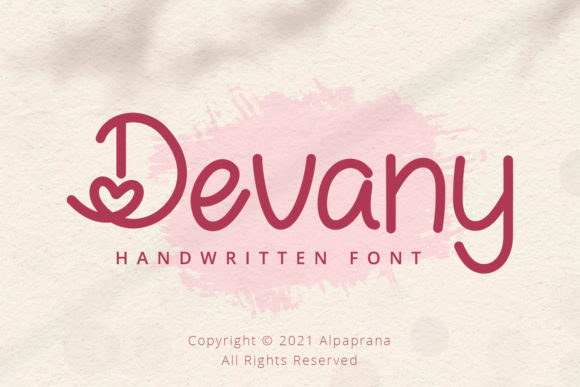
Devany: A Cute Handwritten Font for Brightening Digital Designs
I recently started working on a landing page for a wellness coaching brand that needed a fresh, approachable vibe. The client wanted the site to feel warm and personal, so I began testing different fonts that could carry that tone. That’s when I came across Devany, a script handwritten font that immediately caught my eye. Its soft curves and playful rhythm gave it a distinct personality — something that’s hard to find in many off-the-shelf fonts.
Devany in the Hero Section: A First Impression That Sticks
I dropped Devany into the hero section as the main headline font, pairing it with a clean sans-serif for body text. The result was surprisingly effective. The handwritten font added a sense of warmth and intimacy, which is exactly what the brand needed to stand out in a sea of clinical, minimalist websites. It worked especially well over a light pastel background, where its natural flow and character spacing helped guide the user’s eye down the page.
Because Devany is PUA encoded, I could easily access alternate characters and ligatures without needing special software. This made it easier to customize headlines and ensure they felt unique and tailored to the brand.
Devany for Mobile Readability: Sweet Without the Strain
One of my first concerns with any script font is how it performs on smaller screens. Too often, decorative fonts become illegible or visually overwhelming on mobile. But with Devany, the balance between charm and clarity felt just right. I tested it at various sizes and found that using it for short, impactful phrases — like a tagline or call-to-action — kept it legible without sacrificing style.
I also made sure to use it with plenty of white space and a high contrast ratio, especially when overlaying it on images. This helped maintain readability on mobile without slowing down the page load time, which is always a top priority in web design.
Devany in Branding: Perfect for Creative Portfolios and Boutique Stores
If you're building a creative portfolio or a small boutique online store, Devany can be a standout choice. It brings a sense of personality and authenticity that resonates well with audiences looking for handmade, curated, or artisanal experiences. I used it for a product landing page that showcased a line of organic skincare products, and it helped create a soft, trustworthy impression that aligned with the brand’s values.
Its “full of life” style also works beautifully for course sales pages, blog headers, and digital brand kits where a warm, human-centered tone is key. Just be sure to pair it with more neutral typefaces in supporting roles to avoid overwhelming the layout.
Font Pairing with Devany: Balancing Personality and Practicality
One of the best things about using a display font like Devany is how it opens up opportunities for thoughtful font pairing. Since it’s a decorative handwritten font, I recommend pairing it with a clean, modern sans-serif or a soft serif for body text. This creates a visual hierarchy that guides the user through the page while keeping the overall design polished.
For example, I used Devany for section headers and logo text, and paired it with a system font like Open Sans for body copy. This combination gave the design a balanced, cohesive feel that worked across devices and screen sizes.
Devany for Logo Design and Social Media Graphics
Devany is particularly well-suited for logo design where a custom, personal touch is desired. Its unique letterforms and ligatures allow for more expressive logo treatments without looking overly complicated. I used it for a small business logo and found that it translated well across both digital and print formats, especially when paired with a simpler secondary font for taglines or contact info.
It’s also a strong choice for social media graphics and email headers — anywhere a quick visual impression matters. Because it’s PUA encoded, I could access all the alternate characters directly in design tools like Figma and Canva, which saved time and allowed for more creative flexibility.
What to Watch for When Using Devany in Web Projects
Before using Devany in live projects, I made sure to check the font’s webfont availability and file formats. Fortunately, it supports standard web formats like WOFF and TTF, which means it can be easily embedded into websites without compatibility issues. I also reviewed the licensing terms to ensure it could be used in client work and online stores — a must for any commercial font.
Another thing to consider is performance. While Devany is lightweight and loads quickly, it’s still a decorative font. I recommend limiting its use to key visual elements and optimizing the rest of the page for speed and accessibility.
Devany for Digital Campaigns: Adding Life to Promotional Pages
I also tested Devany on a promotional landing page for a short-term course launch. The goal was to create a sense of excitement and approachability, and the font delivered exactly that. Used in the headline and key call-to-action buttons, it helped create a cohesive visual tone that matched the campaign’s playful energy.
Its handwritten style made the page feel more personal and less like a typical sales funnel, which helped build trust with the audience. I found that using it for short phrases and headlines was most effective — it’s not ideal for long paragraphs or small text, but shines in high-impact areas.
Final Thoughts: Devany as a Design Asset
Overall, Devany is a versatile and expressive script handwritten font that brings a unique personality to digital designs. Whether you’re building a portfolio homepage, a product landing page, or a coaching website, it can help elevate your brand’s visual identity and create a more engaging user experience.
As with any premium font, it’s important to use it thoughtfully and pair it with more neutral typefaces for balance. But when used correctly, Devany can be the difference between a good design and a great one — especially when you want to inject a little sweetness and life into your online presence.